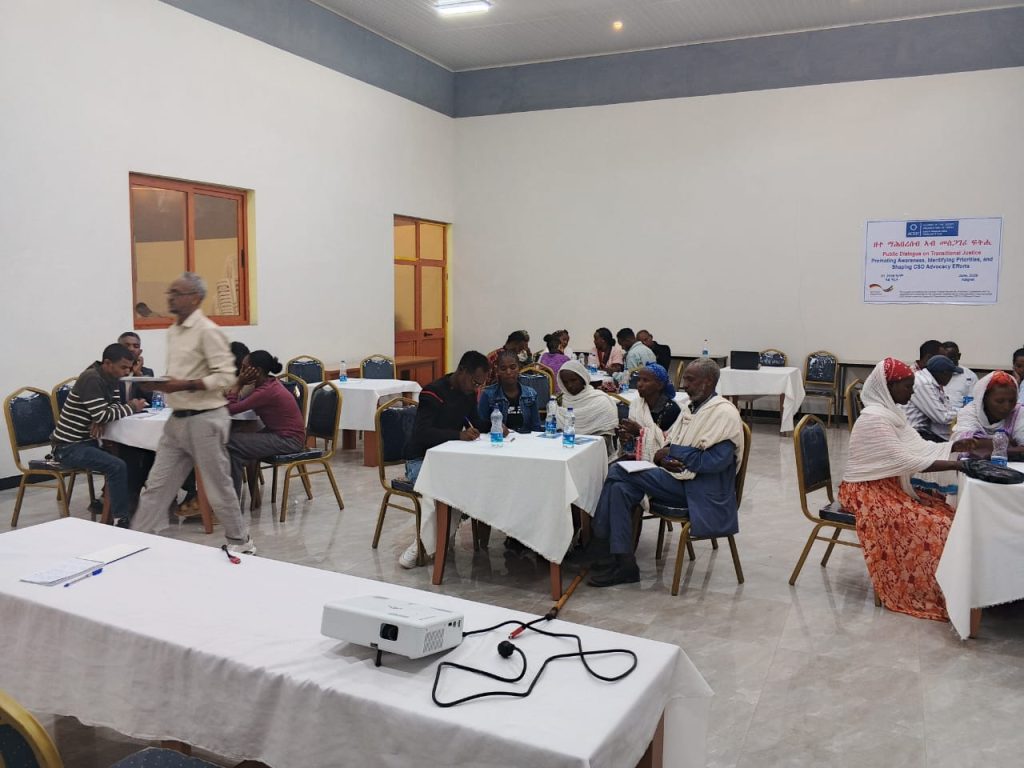
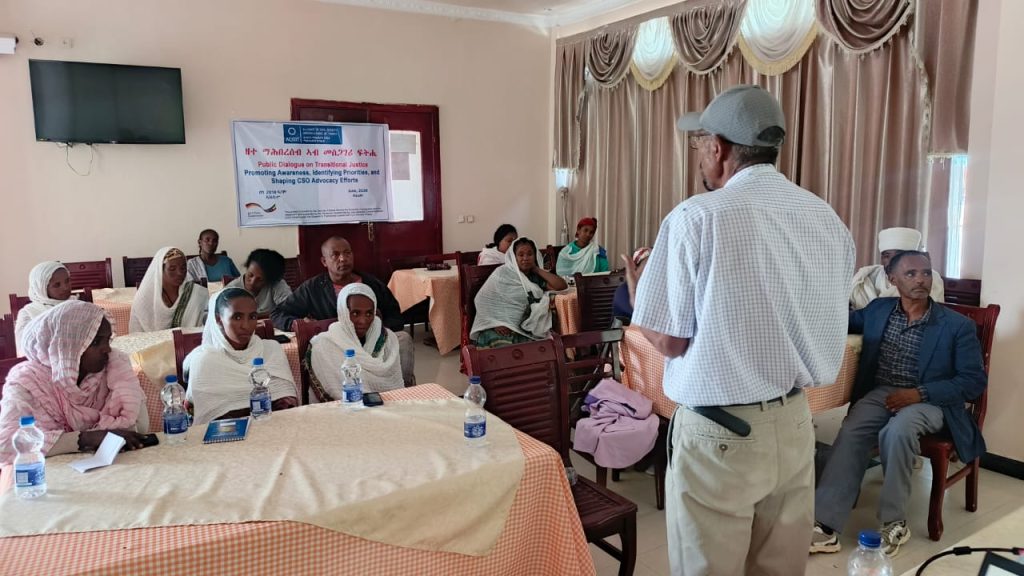
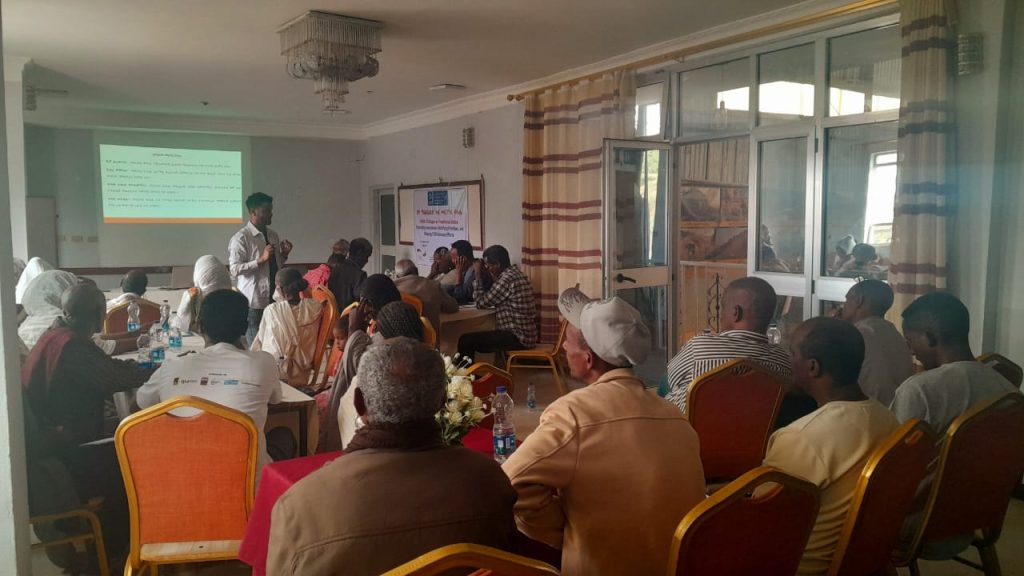
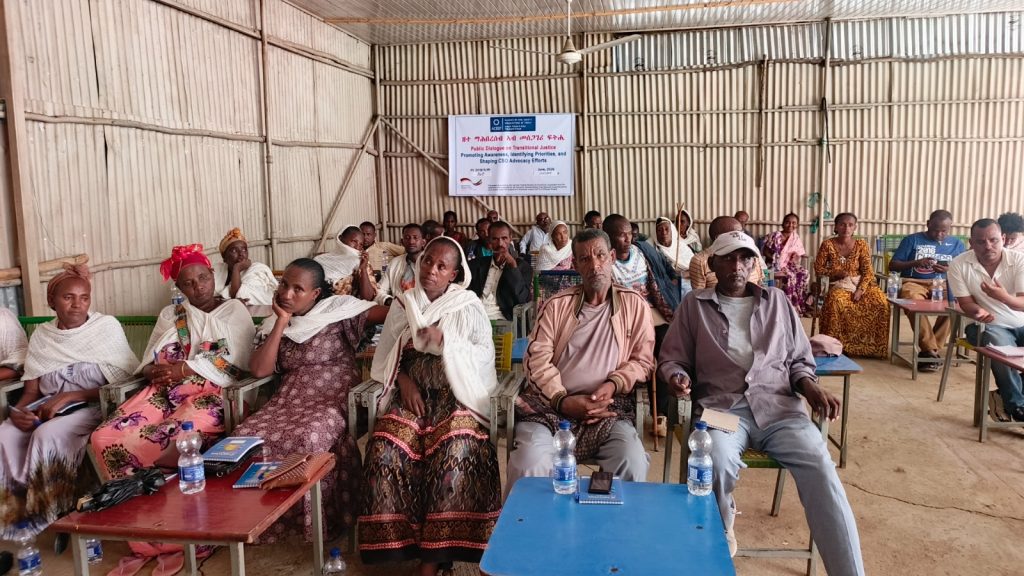
The Alliance of Civil Society Organizations of Tigray (ACSOT), with support from GIZ through the Strengthening Transitional Justice (S2TJ) program, successfully conducted a series of public dialogue sessions on Transitional Justice across five locations in Tigray during June 2026. The dialogues were held in Axum and Adigrat on June 16, in Shire on June 20, in Sheraro on June 21, and in Abi Adi on June 23.
The primary objective of the series was to raise public awareness on transitional justice, capture community perspectives, identify locally grounded priorities, and strengthen the role of victims and local stakeholders in shaping TJ-related advocacy and programming.
A total of 158 participants, comprising community members, victims, women, religious leaders, academics, local CSOs, internally displaced persons, persons with disabilities, and government representatives, took part across the five sessions. The dialogues provided inclusive platforms for participants to reflect on the impacts of the conflict, share perspectives on justice and accountability, and contribute to shaping a grassroots-based transitional justice agenda for Tigray.
Key Outcomes and Community Priorities
Across all locations, participants strongly affirmed the importance of transitional justice as an indispensable pathway to healing, accountability, and sustainable peace, emphasizing dignity restoration, trust-building, and prevention of recurrence under the principle of “Never Again.”
Documentation emerged as a critical and urgent priority across all dialogues. Participants expressed concern that many human rights violations, particularly cases of sexual and gender-based violence, remain undocumented due to stigma and fear. Communities stressed that documentation must be carried out swiftly, with robust witness protection and survivor support mechanisms in place.
The need for victim-centered and holistic support was consistently emphasized, encompassing psychological, social, and economic assistance. Traditional reconciliation mechanisms were recognized as valuable complements to formal justice systems.
Participants across all sessions demanded that justice be delivered without delay, including the protection of mass graves and dignified handling of human remains. Concerns were also raised regarding the volatile security environment, which could derail the TJ process, weaken judicial institutions, or undermine the implementation of the Pretoria Agreement.
In Abi Adi, the dialogue revealed notable divergence in priorities between community members and some government representatives, while communities emphasized justice, accountability, and healing, some officials raised concerns regarding the timing and relevance of TJ discussions amid ongoing security and political challenges. This underscores the need for careful alignment between TJ initiatives and broader governance and stabilization efforts.
Next Steps
ACSOT will continue to strengthen civil society associations and foster collective action at the community level, not only to advance justice but also to resist marginalization and erasure. A genuinely transformative transitional justice process must grow from the ground up.



Leave a Reply